THINKING
Geopolitics with and
without Geography
The Rise and Fall of Maps as Visual Arguments
Abstract from "Geopolitics with and Without Geography The Rise and Fall of Maps as Visual Arguments"
Geopolitics ought to be inseparable from geography, maps, and visual arguments. The classics of geopolitics were well illustrated and made visual arguments, primarily through printed maps. Maps, however, have become rare or forgotten as core elements of twenty-first century geopolitical arguments. Very few contemporary strategists and scholars draw on the assistance of maps or visuals to illustrate their work on international relations. Indeed, visual complements to the written text were more common in the last part of the nineteenth century and the first half of the twentieth century than they are today. Geopolitics emerged as an academic discipline at a time when sophisticated maps were easier to produce and consume, and the heyday of geopolitics in the middle of the twentieth century coincided with a cartographic golden age. During the Cold War and in the period that followed, the spatial frame of geopolitics disappeared: the “geo” in “geopolitics” got lost. Geopolitics is newly prominent in recent years: the present volume is a good example of rigorous study of geographic patterns of international relations and the structure of the international system. New geopolitical arguments deserve new visuals to illustrate them.
Original maps included in the book
This chapter offers some original maps to accompany the many excellent themes of geopolitics covered in this handbook. These few maps are not sufficient to illustrate all of the diverse perspectives, unique regions, and varied arguments presented here. However, these maps do attempt to visualize some key dimensions of the international order in the first quarter of the twenty-first century. These maps are largely about the structural dimensions of contemporary international relations and highlight the distribution of wealth and power in the world.
Read the chapter in the Palgrave handbook ↗Maps for the handbook
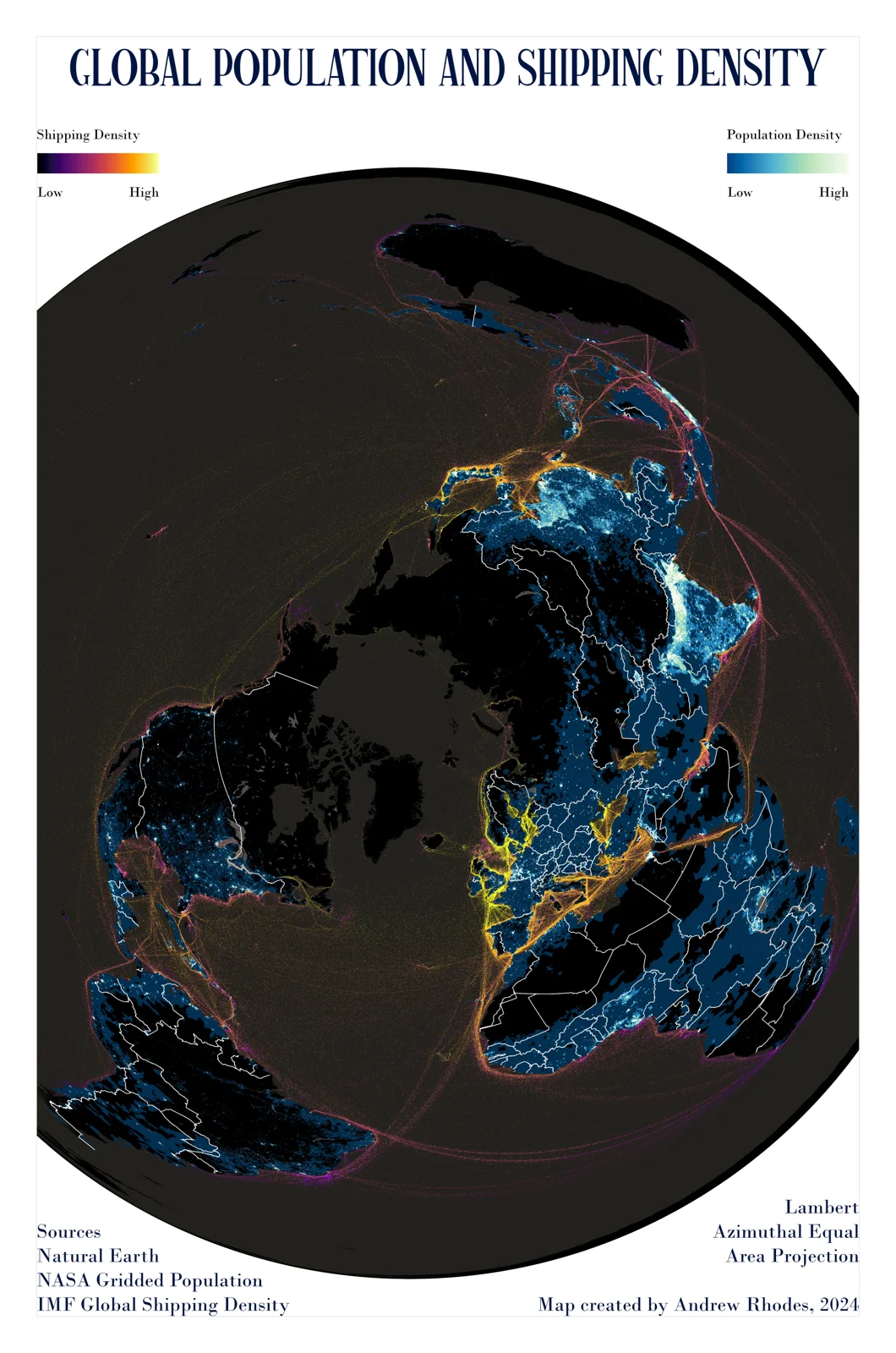
Global Population and Shipping
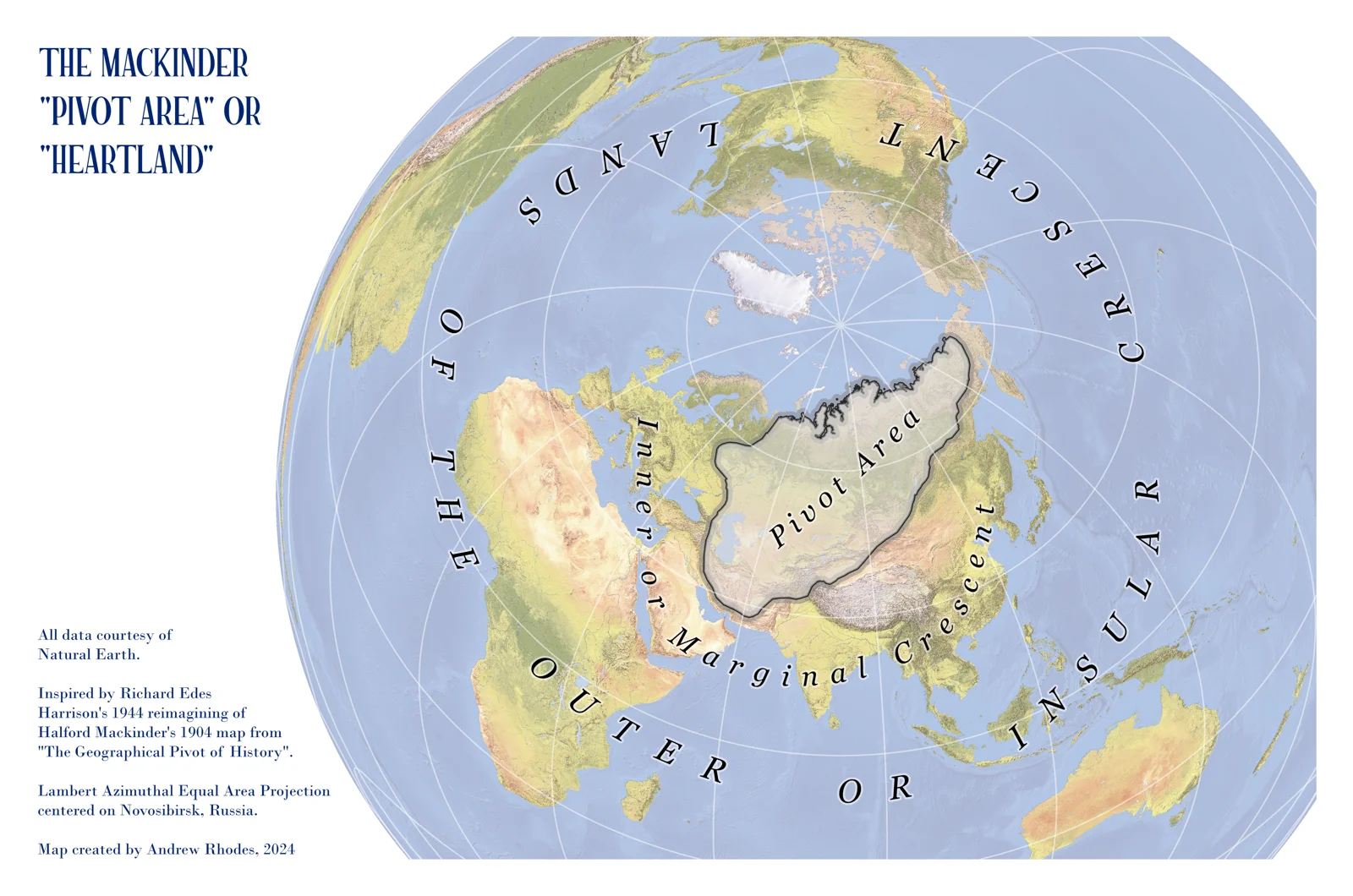
Mackinder's Pivot Area
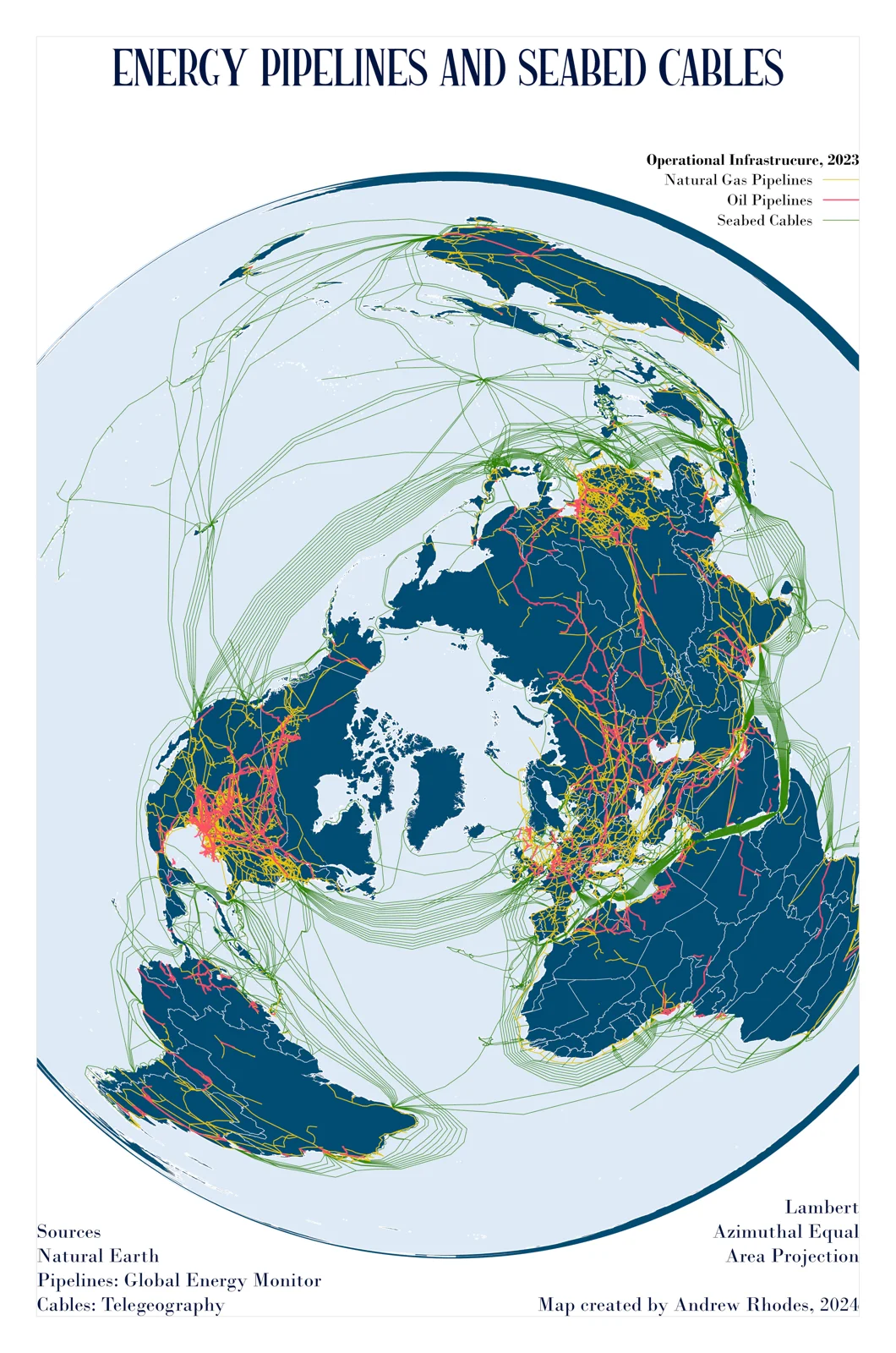
Energy Pipelines and Undersea Cables
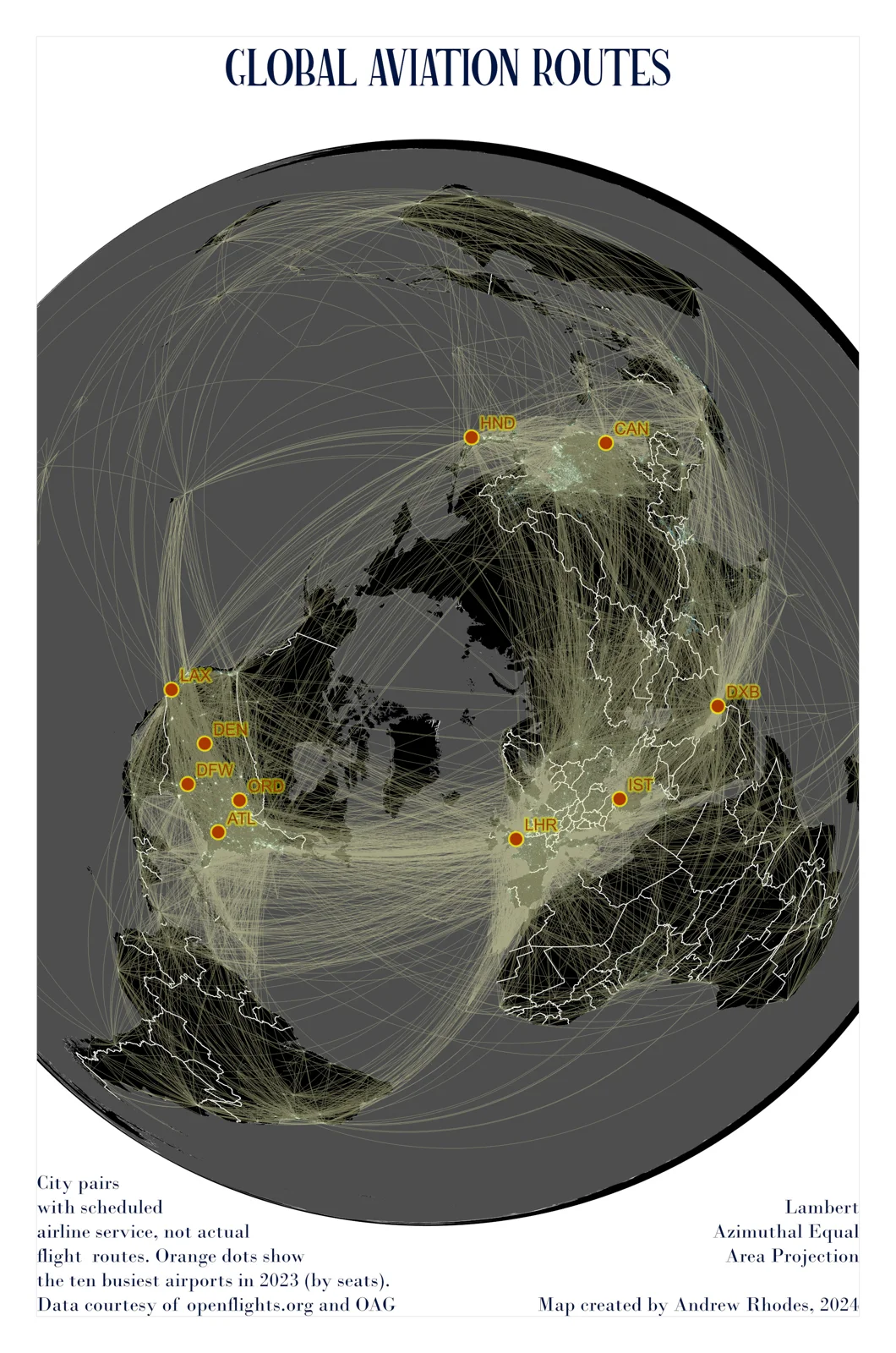
Global Aviation Routes
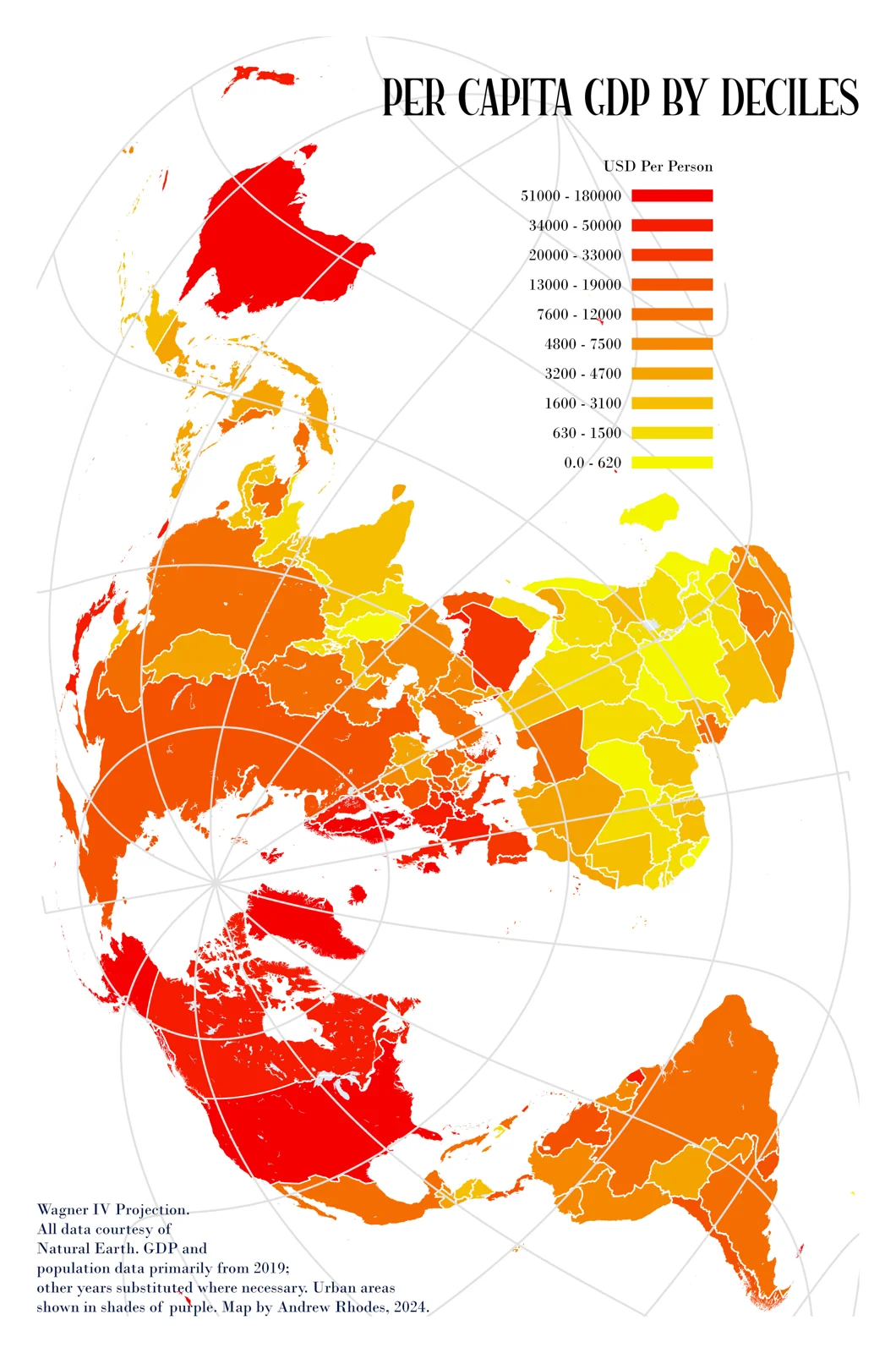
GDP per Capita Around the World
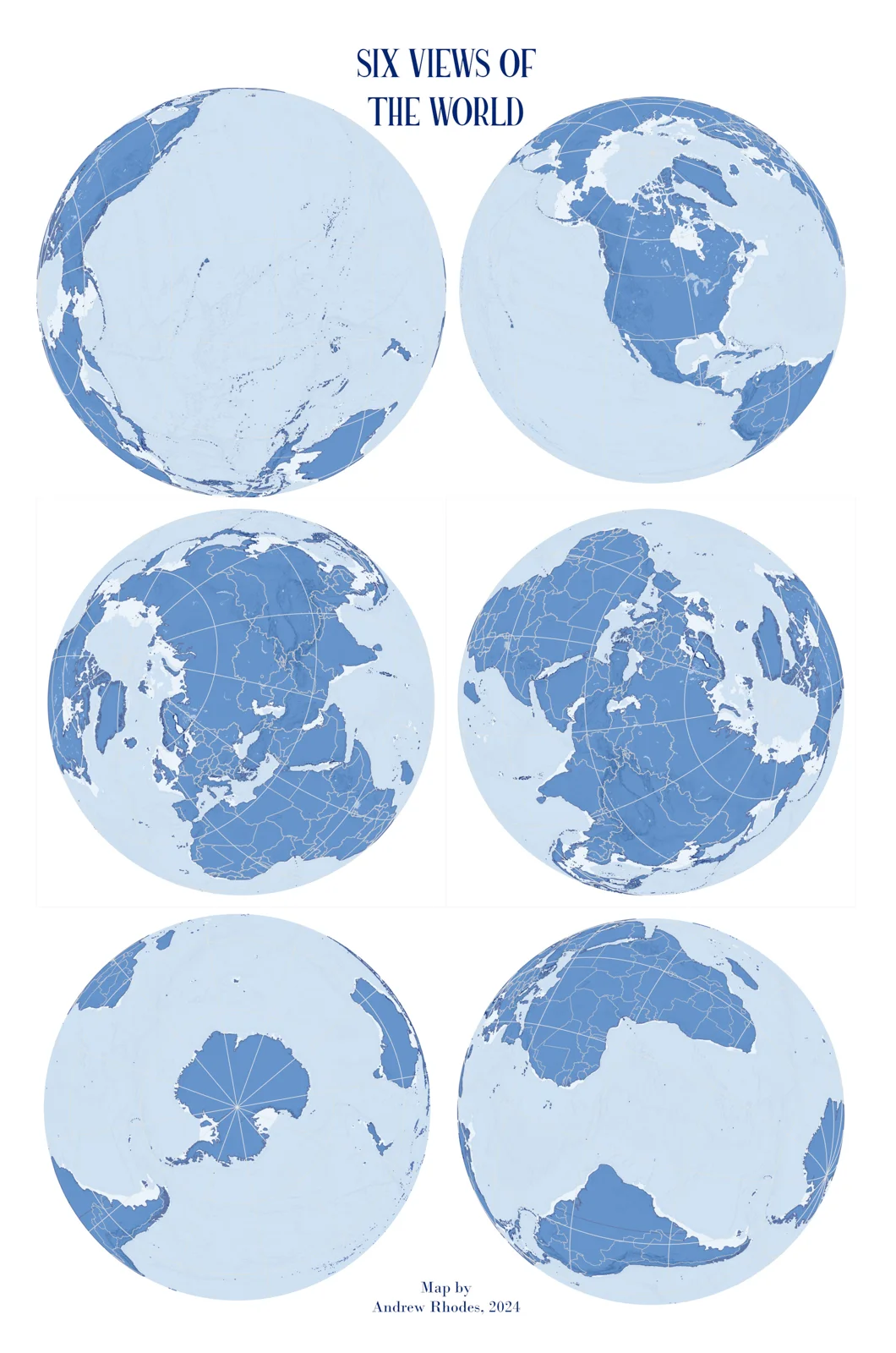
Six Views of the World
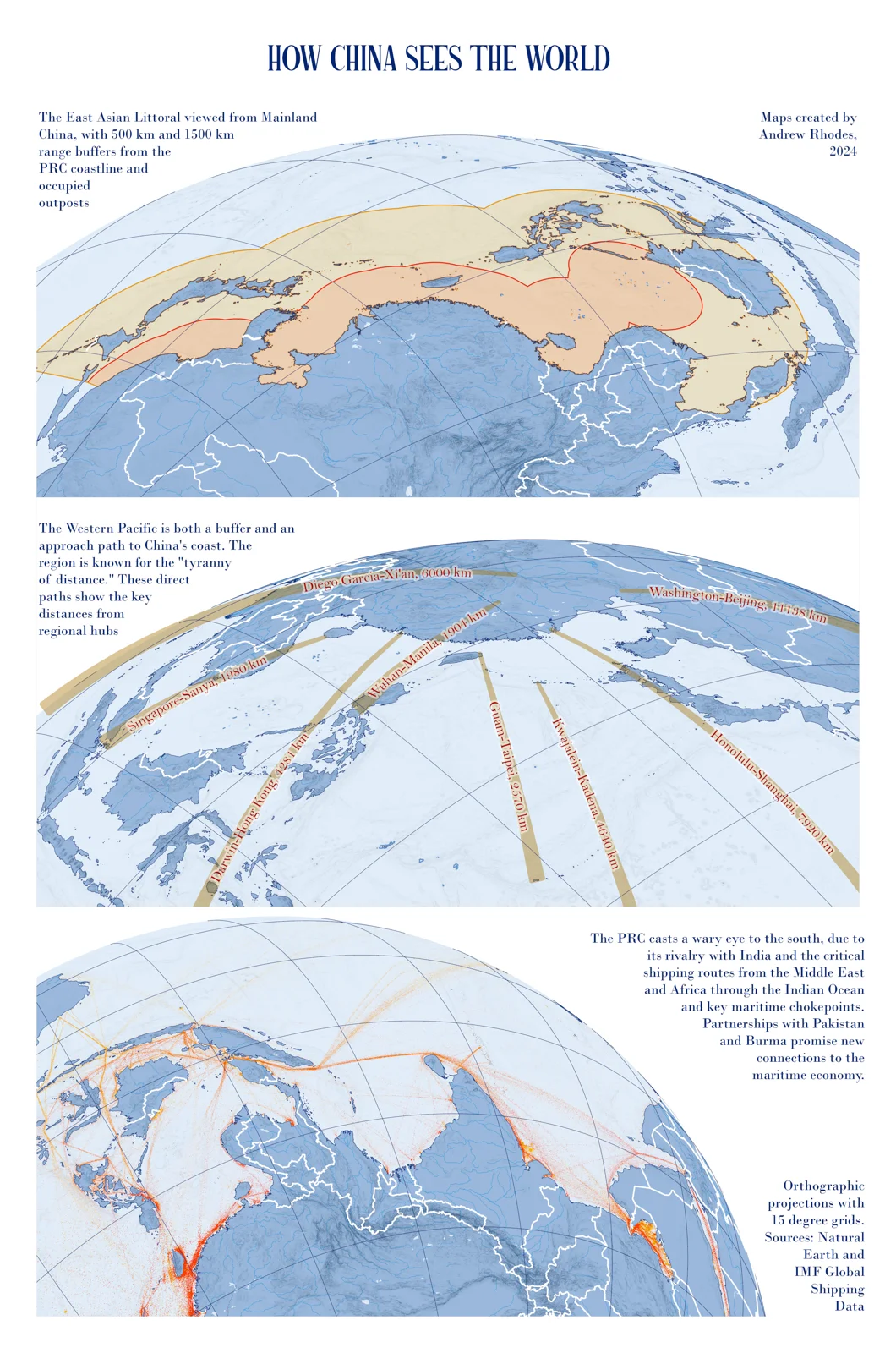
How China Sees the World
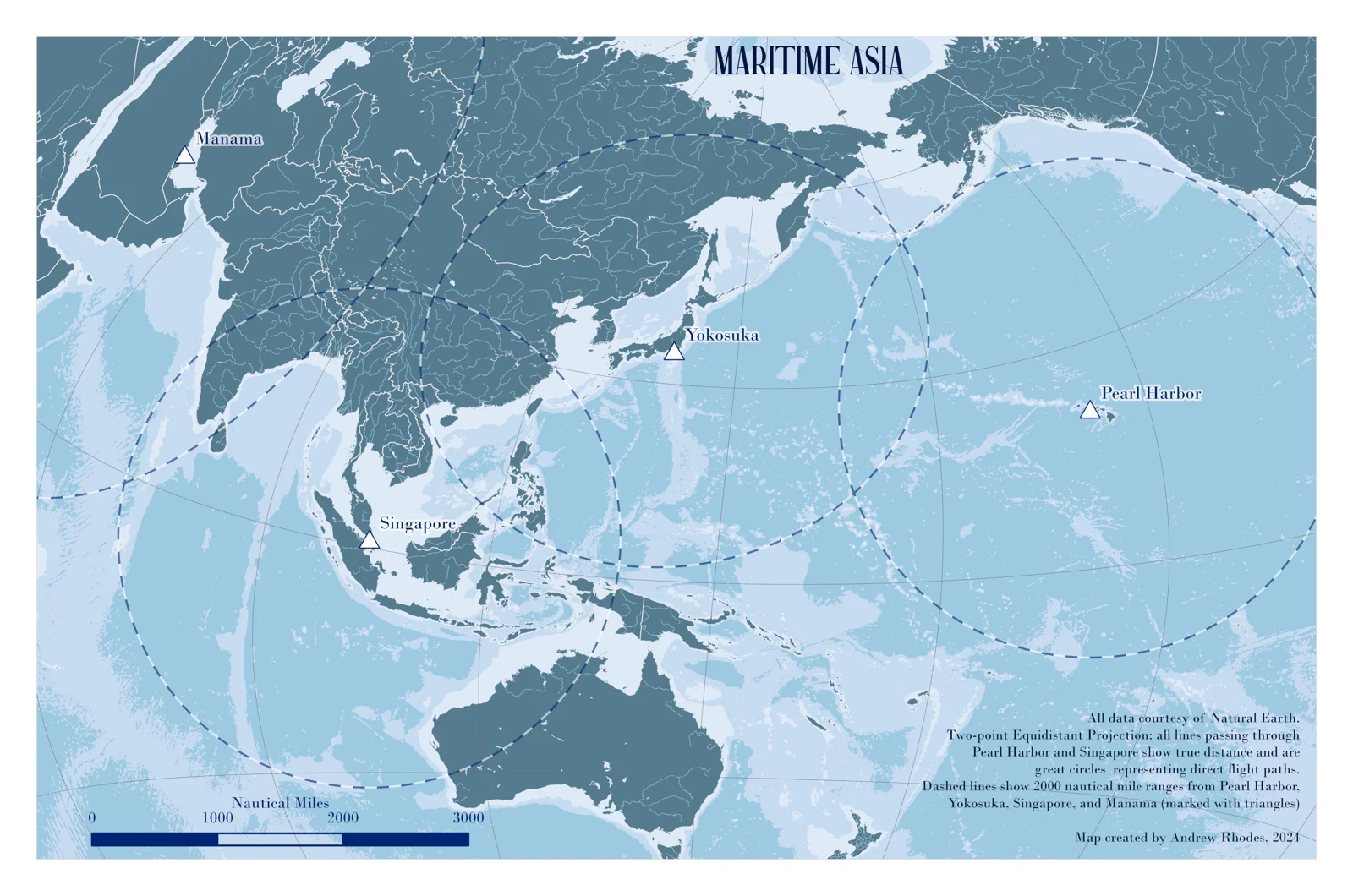
Maritime Asia